Tent Camping Checklist: Everything You Need for a Comfortable Weekend
Updated: 3 hours ago
There’s a big difference between bringing everything you could need for a camping trip and bringing everything you’ll actually need.
Pack too little, and you may spend the weekend wishing you had remembered something important. Pack too much, and half your gear never leaves the car.
A good tent camping checklist falls somewhere in the middle.
The goal isn’t to prepare for every situation imaginable. It’s to cover the essentials, add a few things that make camp more comfortable, and avoid those annoying moments when you realize the flashlight, can opener, or tent stakes are sitting at home.
Whether this is your first camping trip or you just want a better system for packing, this checklist covers what you need for a comfortable weekend at an established campground.
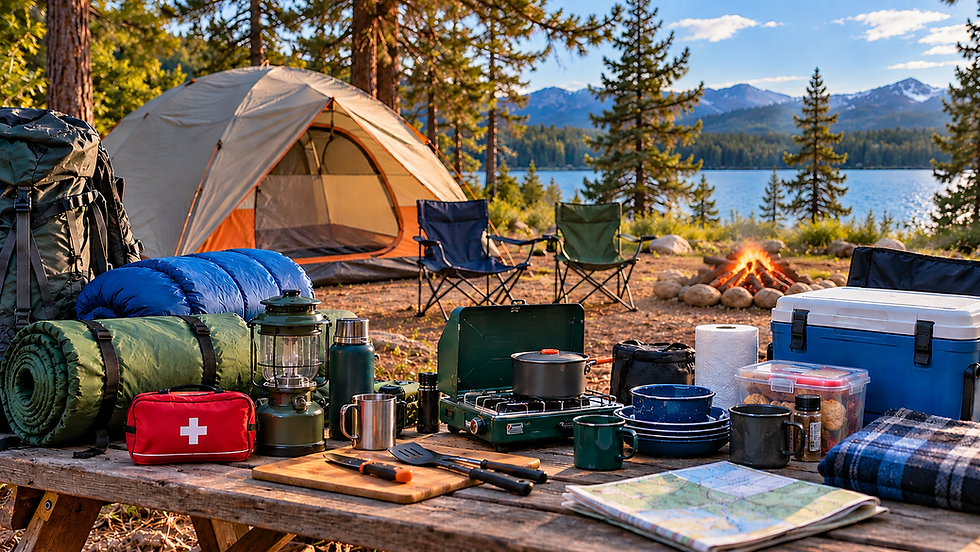
Start With Your Shelter
Your tent is obviously the centerpiece of your campsite, but the tent itself is only part of your shelter system.
At minimum, pack:
Tent
Tent poles
Tent stakes
Rainfly
Groundsheet or footprint
Stake mallet or hammer
It sounds almost silly to list tent poles and stakes separately, but they’re exactly the kind of things that can get separated from a tent between trips.
Before leaving home, make sure everything is actually in the tent bag.
If the tent hasn’t been used recently, setting it up once at home is even better. You can make sure all the pieces are there, inspect it for damage, and remind yourself how everything goes together before you’re trying to figure it out at a campsite.
A footprint or groundsheet isn't mandatory for every tent, but it can help protect the tent floor from abrasion and wet ground. Just make sure it doesn't extend beyond the edges of the tent, where it can collect rainwater.
And before you pitch the tent, spend a few minutes evaluating the site itself. Our guide on how to choose a campsite covers drainage, wind, overhead hazards, shade, and other things worth checking before you start unloading.
Build a Comfortable Sleep System
You can tolerate a surprising number of camping inconveniences after a good night's sleep.
After a bad one, everything becomes annoying.
Your basic sleep system should include:
Sleeping bag or appropriate blankets
Sleeping pad, air mattress, or camping cot
Pillow
Extra blanket when temperatures warrant it
Pay attention to the overnight temperature rather than just the daytime forecast.
A sunny 75-degree afternoon can turn into a considerably cooler night, particularly during spring and fall or at higher elevations.
Your sleeping pad matters for more than comfort, too. It provides insulation between you and the ground. Even a warm sleeping bag can feel surprisingly cold if you're lying directly on a cold surface.
If you use an air mattress, don't forget whatever is required to inflate it.
There are few camping experiences quite like arriving with a comfortable queen-size air mattress and discovering that its electric pump can't actually be powered at your campsite.
Bring the Right Camp Furniture
Technically, you can spend the entire weekend sitting on a picnic table.
You probably won't want to.
A few basic items make a campsite considerably more comfortable:
Camp chairs
Small folding table if the site doesn't provide a picnic table
Tablecloth
Clips for securing the tablecloth
Hammock, if permitted and used with tree-friendly straps
Camp chairs are particularly useful around the fire, while cooking, or simply relaxing somewhere other than the picnic table.
A tablecloth is one of those inexpensive camping items that earns its place quickly. Campground picnic tables are exposed to weather, birds, tree sap, food spills, and countless campers before you.
Covering one takes seconds.
Pack a Simple Camp Kitchen
Camping meals don't have to be complicated.
In fact, simpler is usually better.
Your camp kitchen might include:
Camp stove
Fuel
Lighter or matches
Cookware
Cooking utensils
Plates or bowls
Cups or mugs
Forks, knives, and spoons
Sharp knife
Cutting board
Can opener
Bottle opener
Aluminum foil
Paper towels
Trash bags
Dish soap
Sponge or scrubber
Wash basin
Pot holders or heat-resistant gloves
The exact list depends heavily on what you're planning to cook.
Planning your meals before packing makes this much easier.
If dinner is hot dogs over the fire, you don't need half the kitchen. If you're making pancakes, eggs, coffee, and bacon the next morning, you'll need considerably more.
Think through each meal and ask: What exactly will I need to prepare, cook, serve, and clean this up?
That's usually more effective than throwing random kitchen equipment into a tote.
Food and Water
A cooler full of food doesn't help much if you forget drinking water.
For a typical campground trip, consider:
Drinking water
Cooler
Ice or reusable ice packs
Meals
Snacks
Coffee or other drinks
Condiments
Cooking oil or spray
Seasonings
Food-storage containers
Resealable bags
If the campground provides potable water, you may be able to refill containers rather than carrying all the water you'll need.
Don't assume water will be available, though. Check the campground information before leaving.
The same applies to food storage.
Some campgrounds have specific requirements for storing food, garbage, toiletries, and other scented items because of bears or other wildlife. Follow the rules for wherever you're camping rather than relying on one universal storage method.
And remember: wildlife problems aren't limited to bears.
A determined raccoon can turn an unattended bag of food into a surprisingly expensive buffet.
Don't Forget Lighting
Your campsite changes completely after sunset.
Tasks that seemed trivial during daylight become considerably more difficult when you're trying to accomplish them while holding a phone flashlight under your chin.
Bring:
Headlamp
Flashlight
Lantern
Spare batteries or charging equipment
A headlamp is one of the most useful pieces of camping gear you can own because it leaves both hands free.
That's helpful when cooking, finding something inside the tent, walking to the restroom, or dealing with a tent stake at night.
A lantern works well for general campsite lighting, but avoid turning your site into a miniature stadium. Enough light to see comfortably is usually all you need, and your campground neighbors will appreciate it.
Clothing: Pack for the Forecast — Then Add a Layer
Camping means spending much more time outside than you probably do during a normal day.
That makes changes in temperature much more noticeable.
Depending on the season, consider:
Shirts
Pants or shorts
Underwear
Socks
Sleepwear
Comfortable camp shoes
Hiking shoes or boots
Warm layer or fleece
Rain jacket
Hat
Gloves
Swimsuit
Extra socks
Layering is generally more useful than bringing one extremely heavy piece of clothing.
And extra socks deserve special mention.
Wet feet can make an otherwise great day miserable. A clean, dry pair of socks takes almost no room and can feel remarkably luxurious after a wet hike.
Personal Items and Hygiene
Camping doesn't mean abandoning basic hygiene for the weekend.
Pack whatever you normally need, along with a few campground-specific items:
Toothbrush and toothpaste
Soap
Deodorant
Toilet paper
Hand sanitizer
Towel
Prescription medications
Sunscreen
Insect repellent
Lip balm
Personal hygiene products
Shower supplies if facilities are available
Even when a campground provides restrooms, carrying a small amount of toilet paper isn't a bad idea.
You'll understand why the first time you encounter an empty dispenser at exactly the wrong moment.
Safety and First Aid
You don't need to prepare for a wilderness expedition when you're spending a weekend at an established campground, but some basic safety equipment should always come along.
Include:
First-aid kit
Prescription medications
Emergency contact information
Whistle
Sunscreen
Insect repellent
Weather-appropriate clothing
Map or downloaded offline map when appropriate
It's also worth knowing where the nearest ranger station, campground host, hospital, or urgent care facility is located.
You probably won't need any of them.
That's exactly how you want the trip to go.
Fire and Cooking Supplies
If you're planning a campfire, check current rules before your trip.
Fire restrictions can change because of weather, drought, or local conditions.
Where fires are permitted, you may want:
Firewood
Fire starter
Matches or lighter
Campfire roasting sticks
Heat-resistant gloves
Bucket for water
Many areas restrict transporting firewood over long distances because doing so can spread invasive insects and diseases.
Buying firewood locally or at the campground is often the better option and may be required in some places.
Never leave a campfire unattended, and make sure it is completely extinguished before leaving the campsite or going to sleep.
A Few Things That Make Camping Better
Not everything has to be an essential.
Some gear simply makes camp more enjoyable.
Depending on how you like to camp, consider:
Books
Playing cards
Board games
Binoculars
Camera
Hammock
Portable power bank
Charging cables
Small Bluetooth speaker
Daypack
Water bottles
Firewood carrier
Outdoor blanket
Be considerate with anything that produces light or sound.
Your relaxing playlist may not be quite as relaxing to the family three campsites away.
One of the best parts of camping is hearing what's already around you.
The Tent Camping Checklist
Here's the condensed version you can run through before leaving home.
Shelter & Sleep
Tent
Poles
Stakes
Rainfly
Groundsheet or footprint
Mallet
Sleeping bag
Sleeping pad, mattress, or cot
Pillow
Extra blanket
Campsite
Camp chairs
Folding table if needed
Tablecloth and clips
Lantern
Headlamps or flashlights
Kitchen
Camp stove and fuel
Lighter or matches
Cookware
Cooking utensils
Plates and bowls
Cups
Silverware
Knife and cutting board
Can opener
Paper towels
Dishwashing supplies
Trash bags
Food & Water
Drinking water
Cooler
Ice
Meals
Snacks
Drinks
Condiments
Seasonings
Food-storage containers
Clothing
Daily clothing
Sleepwear
Extra socks
Camp shoes
Hiking footwear
Warm layer
Rain jacket
Seasonal clothing
Personal
Toiletries
Medications
Sunscreen
Insect repellent
Hand sanitizer
Towel
Toilet paper
Safety
First-aid kit
Emergency information
Whistle
Map or offline navigation
Spare batteries
Power bank
Optional Comfort
Hammock
Books
Games
Camera
Binoculars
Outdoor blanket
Charging cables
Adjust the Checklist for Your Trip
No camping checklist works perfectly for everyone.
A family camping for three nights will pack differently than two people spending one night at a campground. Summer camping in Minnesota requires different gear than a chilly October weekend.
Use this list as a starting point rather than a requirement to bring every item.
Consider the campground, weather, length of the trip, activities you're planning, and the people traveling with you.
Then remove what you don't need and add what you do.
Pack Once, Improve the List Every Trip
The easiest way to build the perfect tent camping checklist is to let experience improve it.
After each trip, think about three things:
What did you forget?
Add it to the list.
What did you bring but never use?
Consider leaving it home next time.
What would have made the trip noticeably better?
Add that too.
After a few camping trips, you'll have a packing list tailored to the way you actually camp rather than the way somebody on the internet thinks you should camp.
And once you've packed the essentials, checked the weather, and loaded the car, there's only one major decision left:
Finding a good place to put the tent.
That's where spending five minutes choosing the right campsite can make the rest of the weekend considerably better.
Comments